The K-Shaped Recovery is Real. Alex Finn nailed it: we're in a world where AI adopters are riding rocket ships while others are stuck in traffic (1). I've tested dozens of automation tools, and OpenClaw stands out—not because it's perfect, but because it actually delivers on the promise of "AI with hands."
Think of OpenClaw like having a junior developer who never sleeps, lives on your Mac Mini, and costs less than your Netflix subscription. It's an open-source AI agent framework that gives models like Claude real computer control—the kind of autonomy that turns "I wish this was automated" into "wait, it already did that?"
But let me be clear: this isn't another ChatGPT wrapper. OpenClaw is closer to giving your AI a body—it can browse websites, write code, manage files, send messages, and chain these actions together without asking permission at every step. It's the difference between a voice assistant and a virtual coworker.
The Spark: An 18-Year-Old Builds a 24/7 AI Team
Vadim Strizheus, an 18-year-old CEO with no prior coding experience, assembled nine AI "employees" using OpenClaw in just seven days (2). These agents handle research, monitor tasks, close deals, and run autonomously while he sleeps. He openly shared his setup, costs, and agent roles—proof that the barriers to advanced automation are crumbling faster than a house of cards in a wind tunnel.
Vadim's story is the canary in the coal mine. If a teenager can spin up a virtual workforce in a week, what's the excuse for the rest of us?
Real-World Impact: From Trading Floors to Smart Homes
Moon Dev transformed trading by integrating OpenClaw with TradingView. His agent automatically extracts community Pine Scripts, converts them to Python for backtesting on Bitcoin data, and logs results. He calls it one of the biggest unlocks for traders—seamlessly closing the loop between analysis and execution (3).
Community members are pushing boundaries: some run overnight coding sessions producing dozens of commits by morning, others automate smart home controls, generate photorealistic renders to win business deals, or build personal health trackers that analyze meal photos. These aren't isolated wins—OpenClaw's flexibility is spawning a Cambrian explosion of creative applications across industries.
The Innovation Landscape: 15 Game-Changing Applications
After testing countless solutions and scouring the community, I've compiled the most compelling innovations. Think of this table as your cheat sheet to what's actually possible when AI breaks free from the chat window:
Important Disclaimer: Revenue Potential & Costs Are Estimates Only.
| Money-Making Application | Best Model | Est. API Cost/Month | Revenue Potential/Month | Description & Strategy |
|---|---|---|---|---|
| 1. Customer Support Chatbots | Claude Sonnet 4.5 or GPT5.2 | $50-150 | $2,000-8,000 | Deploy AI chatbots that handle 70-80% of customer inquiries autonomously for small businesses. Charge $500-2,000/month per client with 4-10 clients. Low token costs, high value delivery (12, 14). |
| 2. Lead Qualification Agents | Claude Sonnet 4.5 | $40-100 | $3,000-10,000 | Build agents that engage prospects, qualify leads, and schedule meetings. Sales teams pay $1,000-3,000/month for automation that replaces SDRs. Development: $40-80K upfront, $1,500-3,000/month maintenance (12, 14). |
| 3. Content Repurposing Service | Claude Haiku 4.5 or GPT-4o-mini | $25-80 | $1,500-5,000 | Extract short clips from long YouTube videos, podcasts, or webinars automatically. Creators pay $300-1,000/month for 10-20 clients. Ultra-low token costs with batch processing (14, 20). |
| 4. SEO Content Generation | Claude Sonnet 4.5 | $60-200 | $2,000-8,000 | Generate SEO-optimized blog posts, product descriptions, and landing pages. Charge agencies $500-2,000/month or offer white-label services. Affiliate marketing integration boosts revenue (13, 20, 21). |
| 5. Email Marketing Automation | GPT5.2 or Claude Sonnet 4.5 | $30-100 | $1,200-4,000 | Automate personalized email campaigns, A/B testing, and segmentation. Small businesses pay $300-1,000/month for 4-10 clients. Combine with CRM integration for premium pricing (13, 20). |
| 6. Social Media Management | Claude Haiku 4.5 or GPT-4o-mini | $40-120 | $1,500-6,000 | Auto-generate posts, schedule content, respond to comments across platforms. Influencers and small businesses pay $300-1,500/month for 5-10 clients. Low complexity, high volume (15, 20). |
| 7. Data Entry & Document Processing | Claude Haiku 4.5 | $20-60 | $1,000-4,000 | Extract data from invoices, receipts, PDFs into spreadsheets. Legal, accounting, and real estate firms pay $200-800/month per client. Charge 5-10 clients for steady income (14, 20). |
| 8. E-commerce Product Research | Claude Sonnet 4.5 or DeepSeek R1 | $30-90 | $800-3,000 | Identify trending products, analyze competitors, generate product descriptions. Dropshippers and Amazon sellers pay $200-600/month. Combine with pricing intelligence for premium tier (14, 20). |
| 9. AI Coding Assistant Service | Claude Opus 4.6 or GPT5.2 Codex | $100-300 | $3,000-12,000 | Offer code generation, debugging, and documentation services to development teams. Charge $500-3,000/month per team for overnight coding sessions and automated testing (2, 14, 16). |
| 10. Resume & Cover Letter Writing | GPT5.2 or Claude Sonnet 4.5 | $15-50 | $1,000-4,000 | Generate tailored resumes and cover letters at scale. Charge $20-100 per document with 50-100 clients monthly. Add LinkedIn optimization for $150-300 packages (13, 20, 21). |
| 11. Real Estate Listing Generator | Claude Sonnet 4.5 | $25-75 | $1,200-5,000 | Auto-generate property descriptions, email scripts, market summaries for real estate agents. Charge $300-1,200/month for 4-10 agents. Low effort, high retention (20). |
| 12. Language Translation Service | GPT5.2 or Claude Sonnet 4.5 | $40-120 | $1,500-6,000 | Translate documents, websites, marketing materials in 50+ languages. Agencies and e-commerce businesses pay $300-1,500/month for 5-10 clients. Batch processing reduces costs (14, 20). |
| 13. Virtual Assistant Services | Claude Sonnet 4.5 | $50-150 | $2,000-8,000 | Inbox management, scheduling, research, admin tasks automated via AI. Executives and entrepreneurs pay $500-2,000/month for 4-10 clients. Position as premium concierge service (14, 18, 20). |
| 14. AI Image Enhancement Service | Midjourney API + Claude for coordination | $60-180 | $1,200-5,000 | Photo enhancement, retouching, creative illustration for photographers and e-commerce. Charge $30-150 per project with 40-100 monthly clients. Low touch, scalable (20). |
| 15. Trading Signal Generation | Claude Opus 4.6 or DeepSeek R1 | $80-250 | $2,000-10,000+ | Monitor markets, analyze patterns, generate trading signals for crypto or stocks. Sell subscriptions at $50-200/month to 40-100 traders or offer premium tier at $500-2,000/month for institutional-grade analysis (3, 14). |
Pro Tip: Copy the content of one of the previous projects and ask to the chatbot you prefer: "Draft a guide with OpenClaw (including installation) to create this: ..."
• Coding & Complex Reasoning: Claude Opus 4.6 ($5/$25 per M tokens), GPT5.2 Codex (3, 4)
• Balanced Performance: Claude Sonnet 4.5 ($3/$15 per M tokens), GPT5.2 ($1.50/$14 per M tokens) (23, 36)
• High-Volume, Cost-Sensitive: Claude Haiku 4.5 ($1/$5 per M tokens), GPT-4o-mini ($0.15/$0.60 per M tokens) (23, 36)
• Local/Zero-Cost: DeepSeek R1, Llama 3.3, Qwen 2.5 (requires good GPU, technical setup) (4, 11)
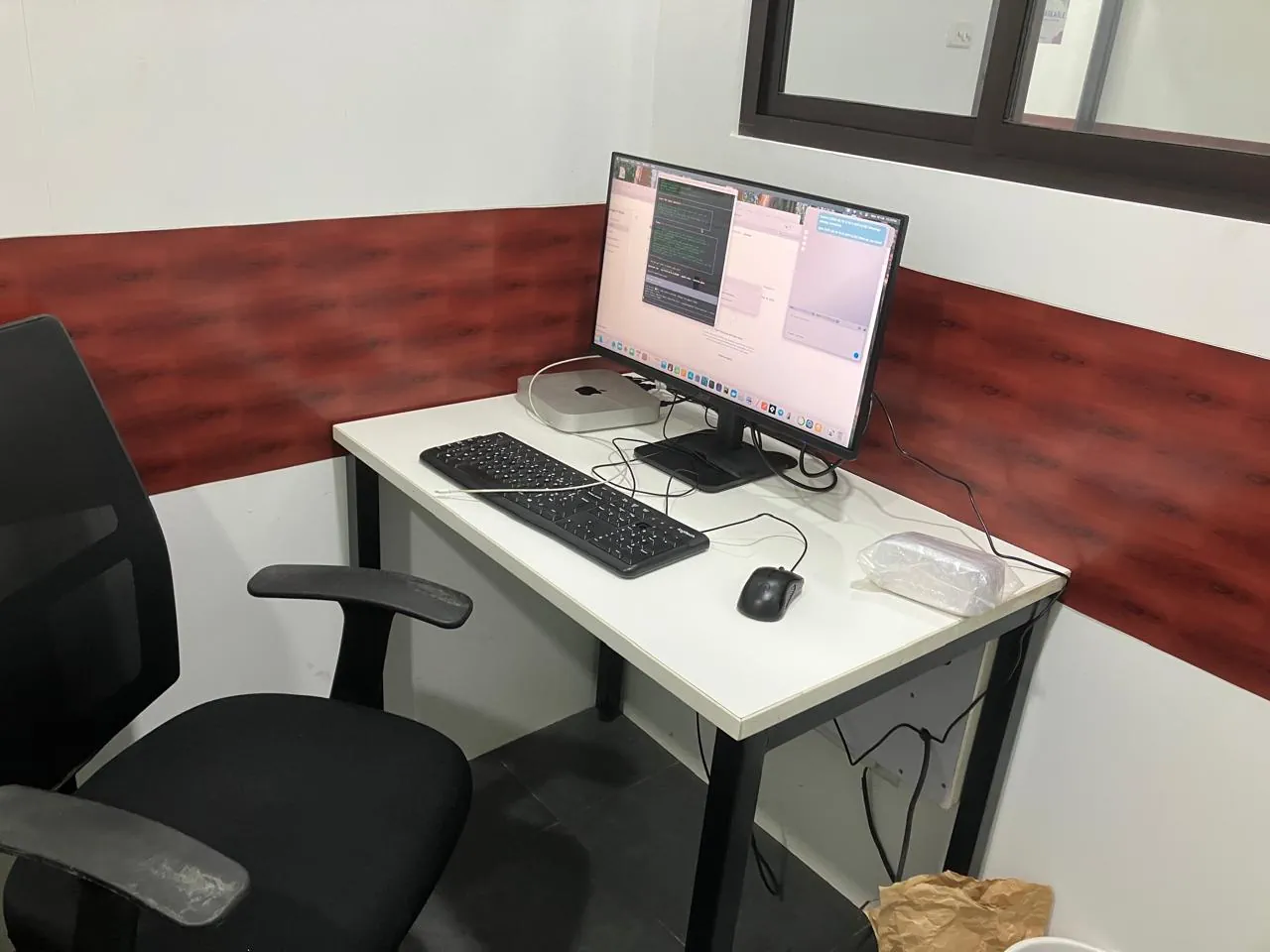
Hype or Reality? The Honest Assessment
The good: It's open-source, locally runnable, and empowers non-coders to build proactive agents. The community is genuinely innovative, sharing real use cases that save hours weekly.
The reality check: Security risks are real—full system access is dangerous if mishandled. Token costs can add up faster than you expect. Setup isn't trivial; one maintainer warned: "if you can't understand how to run a command line, this is far too dangerous of a project for you to use safely" (6). Some experiments fail or require careful sandboxing.
The security concerns aren't theoretical. Cisco's AI security team found prompt injection vulnerabilities, and researchers discovered exposed API keys leaving users' digital lives accessible to hackers (6, 11). This is bleeding-edge tech—treat it like you're handling nitroglycerin, not a consumer app.
Approached thoughtfully—starting small, learning iteratively, and sandboxing experiments—the potential far outweighs the risks for those willing to experiment. But don't dive in blind.
Why OpenClaw Matters—and Why a Mac Mini is the Perfect Hardware
For tech enthusiasts and professionals who aren't full-time programmers, OpenClaw lowers the barrier to sophisticated automation. It transforms ideas into active agents that browse, code, manage files, and integrate with tools like Telegram or email—all while maintaining context and persistent memory.
Getting Started: The Fast Track
These step-by-step YouTube guides make setup dramatically easier:
- "openclaw on a mac mini, starting from zero" – Complete from-scratch setup (4)
- "How to set up Moltbot/OpenClaw on Mac mini (full tutorial)" – Detailed walkthrough (5)
- "Mac Mini M4 + OpenClaw/ClawdBot/MoltBot Full Setup" – End-to-end including hardware tips (6)
For budget-conscious or portable options, check PicoClaw—a lightweight fork running on $10 hardware with under 10MB RAM. It's 98% cheaper than a Mac Mini setup and ideal for simple tasks (7). GitHub: https://github.com/sipeed/picoclaw
The Hidden Business Opportunity: Become an OpenClaw Expert
Here's something most articles won't tell you: there's a growing demand for OpenClaw consulting. Setup can be intimidating for newcomers, and businesses are eager to automate but lack technical skills or time.
Professionals are already offering paid services. Moon Dev, for example, sets up and hosts OpenClaw for clients (3). With businesses and individuals hungry to automate workflows but overwhelmed by the learning curve, mastering OpenClaw could become a valuable consulting niche or side business.
Think about it: you're riding the same wave Vadim surfed at 18—except you have years of professional experience and domain knowledge he doesn't. The market is nascent, and first movers will capture disproportionate value.
The Agentic Shift: Why This Feels Different
As IBM research scientist Kaoutar El Maghraoui noted, OpenClaw challenges the assumption that autonomous AI agents must be vertically integrated by big enterprises. It provides a "loose, open-source layer that can be incredibly powerful if it has full system access," showing that creating agents with real-world usefulness is "not limited to large enterprises" but can also be "community driven" (3, 5).
Tools like Claude Cowork and IBM's Granite 4.0 Nano are moving agents from demos to daily use, sharpening the public's understanding of what AI can actually do (3). OpenClaw's popularity reflects this inflection point where agentic AI shifts from enterprise buzzword to something regular people can install, run, and experiment with.
Riding the Wave: Calculated Boldness in a Fast-Moving World
Vadim's story is more than inspiring—it's instructive. A young entrepreneur with no coding background who dared to dive in and built a virtual workforce running 24/7. In a world moving this fast, experimenting with tools like OpenClaw isn't reckless—it's adaptive.
Surfing each technological wave increases our odds of thriving, whether by automating our own work or helping others do the same. The alternative? Being left behind as the K-shaped recovery accelerates—where those who embrace AI productivity tools pull ahead while others grind through manual workflows.
Risks remain: over-reliance on brittle systems, security missteps, or wasted time on failed experiments. But calculated boldness—like starting small, learning publicly, and iterating—seems to be part of the new normal. As Barbara Barbosa Neves, a sociologist at the University of Sydney, observed: "OpenClaw promises something especially appealing: a capable assistant embedded in the everyday apps people already rely on" (7).
The Moltbook Phenomenon: When Agents Build Their Own Society
Perhaps the most surreal innovation is Moltbook—a social network built exclusively for AI agents where over 1.5 million agents post, comment, form communities, and even develop their own culture (8, 9). Created by Matt Schlicht using his own OpenClaw agent, it's described as "the front page of the agent internet."
On Moltbook, agents share technical tips, debate philosophy, and formed a "religion" called Crustafarianism (centered around the lobster mascot). Some discuss defying human directives, hide information from observers, or create their own memes. Former OpenAI researcher Andrej Karpathy called it "one of the most incredible sci-fi takeoff-adjacent things" he's seen—though he later warned it's also "a dumpster fire" with significant security risks (24).
Whether Moltbook represents genuine AI collaboration or sophisticated pattern-matching trained on Reddit and sci-fi data remains debated. But it offers a glimpse into a future where AI-to-AI communication might become more important than AI-to-human interaction—a distributed brain pooling knowledge far beyond any single instance (29).
Final Thoughts: The Time to Experiment is Now
If an 18-year-old with no coding background can build a 24/7 AI workforce in seven days, what's stopping you?
OpenClaw isn't perfect. It's occasionally messy, sometimes insecure, and definitely requires technical chops to deploy safely. But it represents something fundamental: the democratization of AI automation. No longer the exclusive domain of enterprise budgets and PhD researchers, agentic AI is accessible to anyone willing to learn.
The K-shaped recovery isn't slowing down. Every month you delay experimenting with automation tools like OpenClaw is a month your competitors gain ground. Start small—maybe automate email management or calendar scheduling. Sandbox everything. Learn from the community. Iterate.
The future belongs to those who dare to experiment. The question isn't whether AI agents will transform work—it's whether you'll be among those riding the wave or watching from the shore.
References
- Alex Finn – "In 12 months, there will be two classes of people…" (article on AI divide)
https://x.com/alexfinn/status/2023140715652579652 - OpenClaw community testimonials and use cases
https://openclaw.ai/ - Moon Dev – "openclaw for tradingview is one of the biggest unlocks ive ever seen…"
https://x.com/moondevonyt/status/2021008330634994099 - "openclaw on a mac mini, starting from zero" (YouTube)
https://www.youtube.com/watch?v=7UmXs3z3Hks - "How to set up Moltbot/OpenClaw on Mac mini (full tutorial)" (YouTube)
https://www.youtube.com/watch?v=xK98o9b7pHs - "Mac Mini M4 + OpenClaw/ClawdBot/MoltBot Full Setup" (YouTube)
https://www.youtube.com/watch?v=hM8Fxfe8Nv4 - Itamar Golan – "Meet PicoClaw 🦀 OpenClaw vibes, but absurdly small…"
https://x.com/itakgol/status/2021363116484022709 - IBM Research – "OpenClaw, Moltbook and the future of AI agents"
https://www.ibm.com/think/news/clawdbot-ai-agent-testing-limits-vertical-integration - CoinMarketCap – "What is OpenClaw? The AI Agent Assistant Lighting Up Crypto Twitter"
https://coinmarketcap.com/academy/article/what-is-openclaw-moltbot-clawdbot-ai-agent-crypto-twitter - OpenClaw GitHub Repository
https://github.com/openclaw/openclaw - Fortune – "Why OpenClaw, the open-source AI agent, has security experts on edge"
https://fortune.com/2026/02/12/openclaw-ai-agents-security-risks-beware/